* Please scroll down to read the English content below
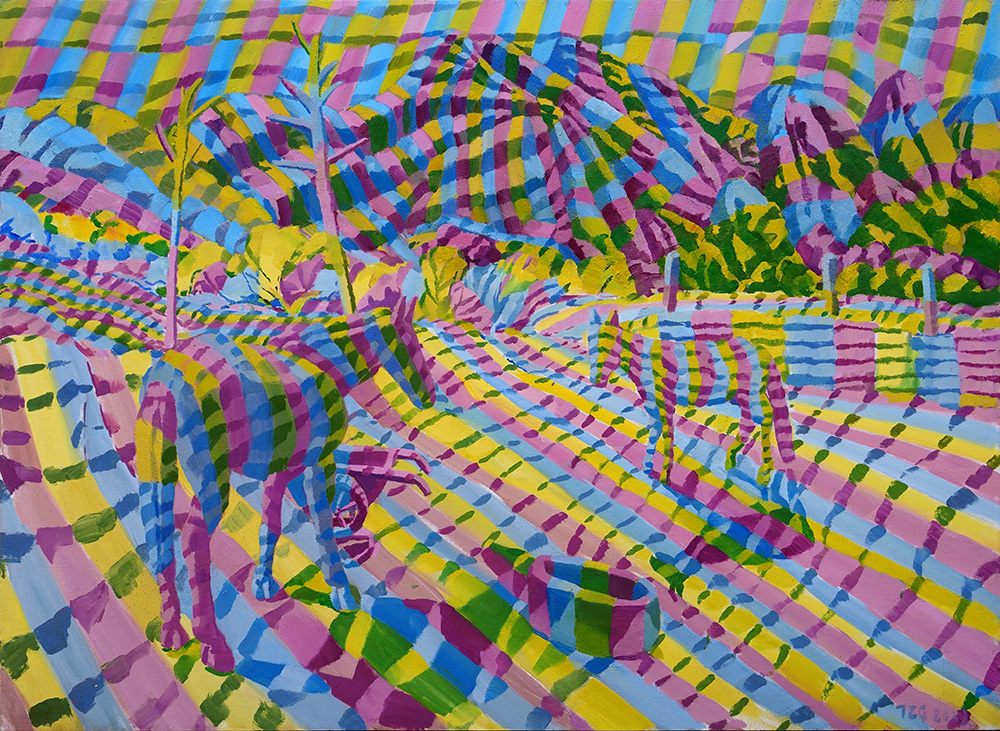
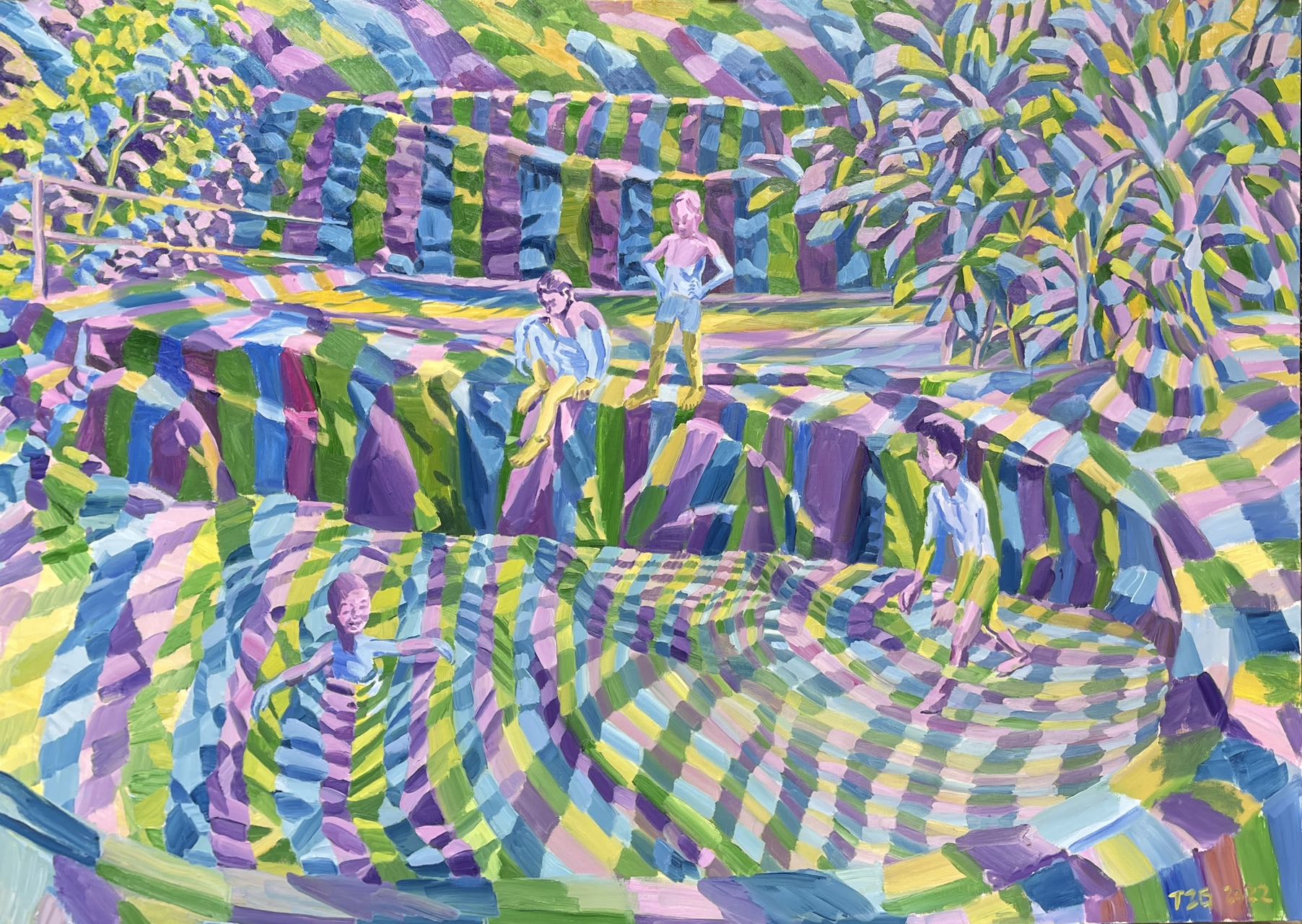
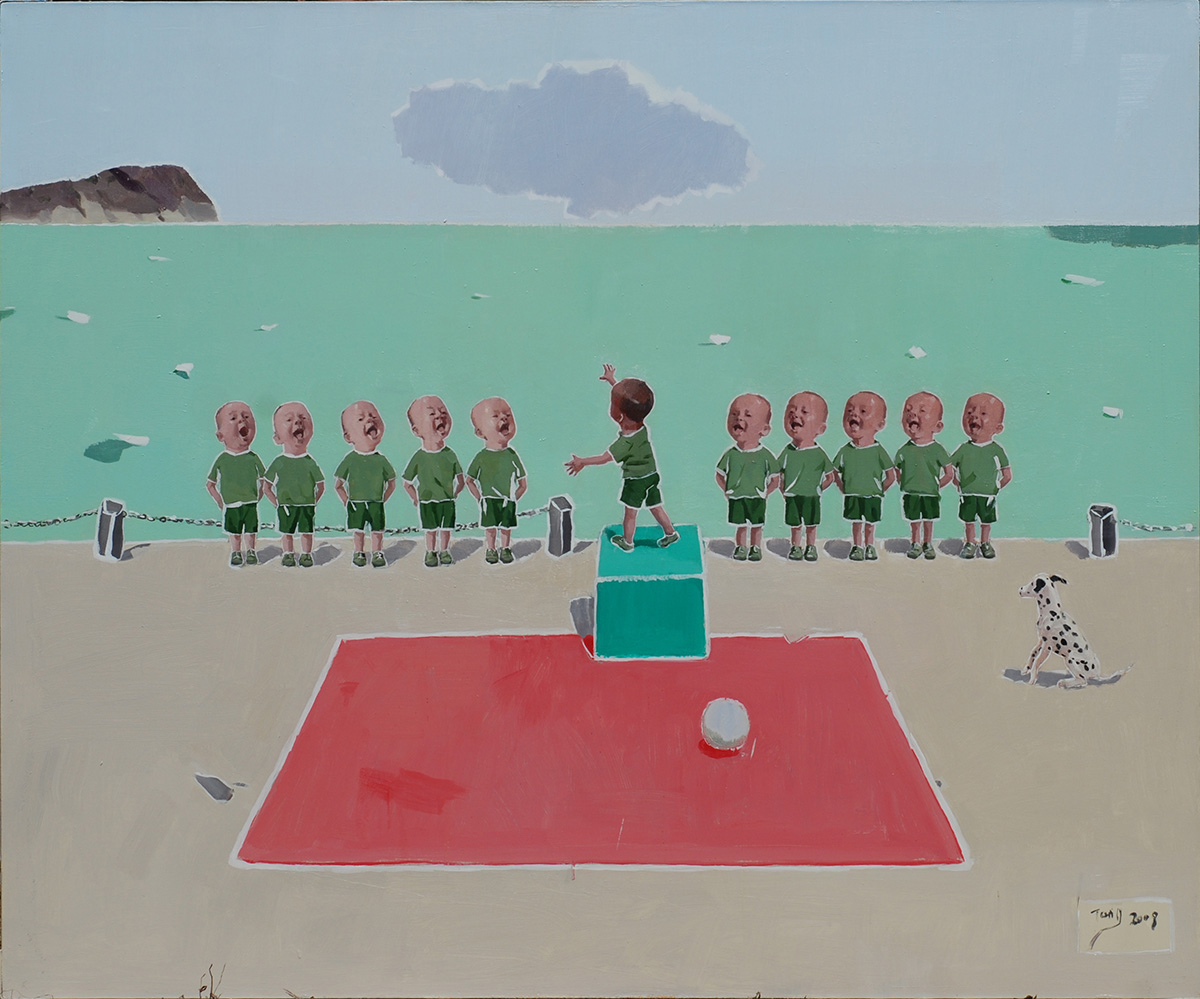
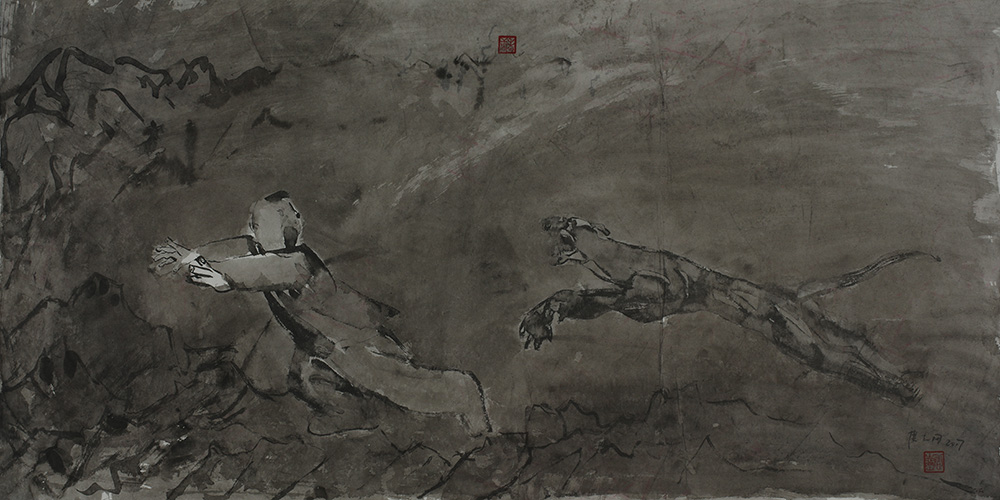
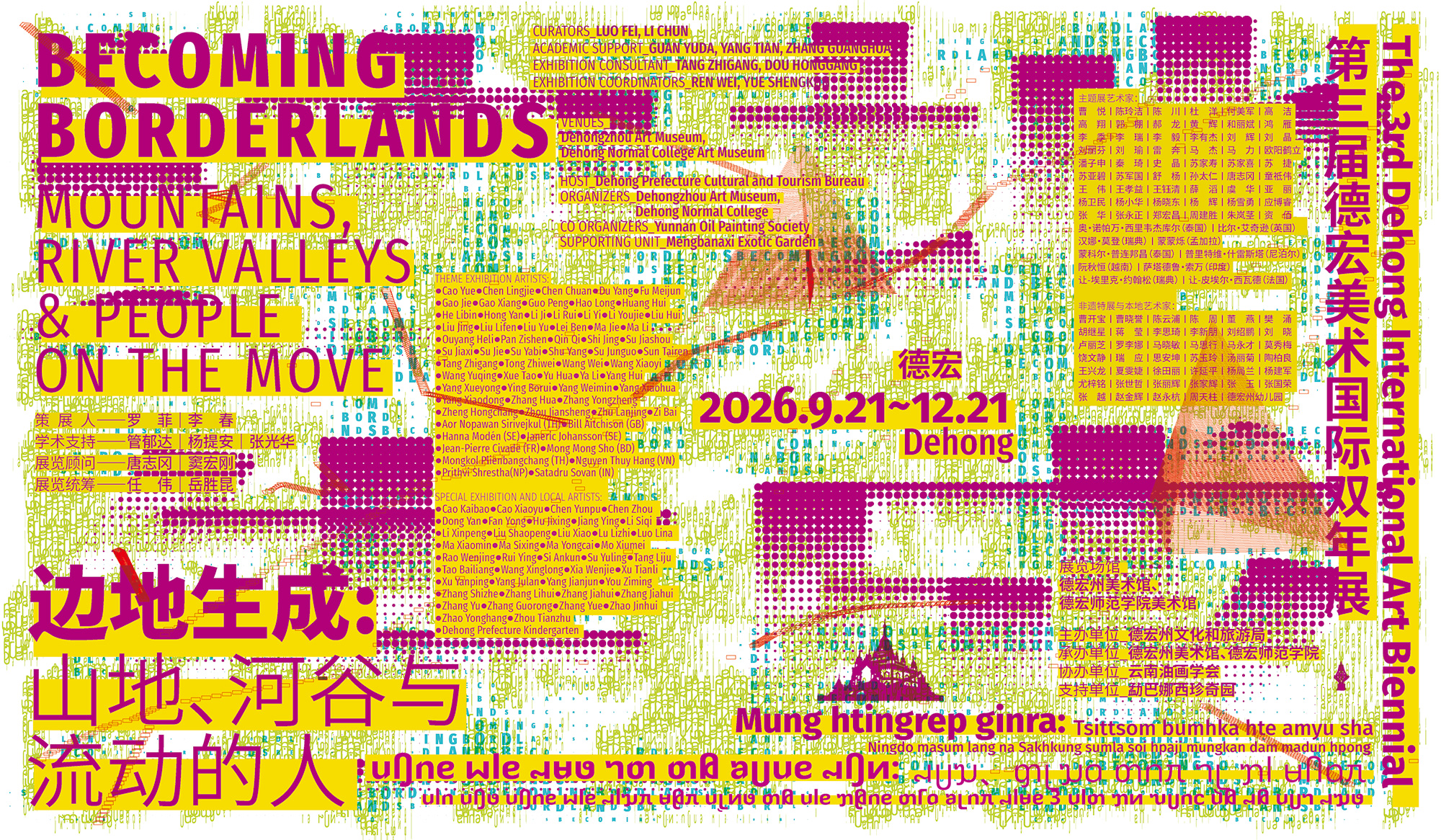
边地生成:山地、河谷与流动的人——第三届德宏美术国际双年展
主办单位:德宏州文化和旅游局
承办单位:德宏州美术馆、德宏师范学院
协办单位:云南油画学会
支持单位:勐巴娜西珍奇园
开幕时间:2026年9月21日上午10点
开幕地点:德宏州美术馆
展览日期:2026年9月21日——12月21日
展览场馆:德宏州美术馆、德宏师范学院美术馆
策展人:罗菲、李春
学术支持:管郁达、杨提安、张光华
艺术顾问:唐志冈、窦宏刚
展览统筹:任伟、岳胜昆
主题展艺术家名单
曹悦、陈玲洁、陈川、杜洋、付美军、高洁、高翔、郭棚、郝龙、黄辉、和丽斌、鸿雁、李季、李瑞、李毅、李有杰、刘辉、刘晶、刘丽芬、刘瑜、雷奔、马杰、马力、欧阳鹤立、潘子申、秦琦、史晶、苏家寿、苏家喜、苏捷、苏亚碧、苏军国、舒杨、孙太仁、唐志冈、童祗伟、王伟、王孝益、王钰清、薛滔、虞华、亚丽、杨卫民、杨小华、杨晓东、杨辉、杨雪勇、应博睿、张华、张永正、郑宏昌、周建胜、朱岚茎、资佰
奥・诺帕万・西里韦杰库尔(泰国)、比尔・艾奇逊(英国)、汉娜・莫登(瑞典)、蒙蒙烁(孟加拉)、蒙科尔・普连邦昌(泰国)、普里特维・什雷斯塔(尼泊尔)、阮秋恒(越南)、萨塔德鲁・索万(印度)、让‑埃里克・约翰松(瑞典)、让‑皮埃尔・西瓦德(法国)
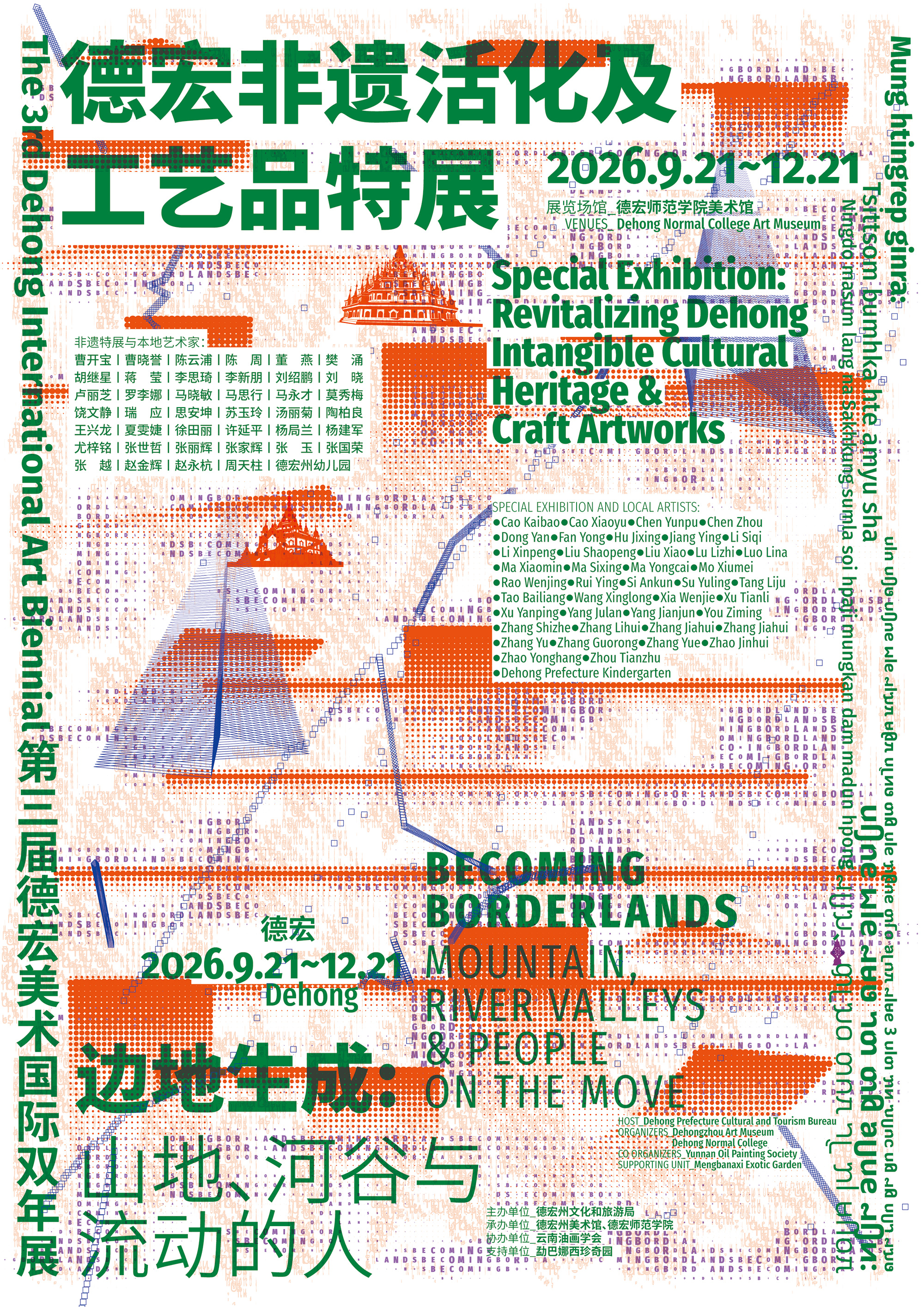
非遗特展与本地艺术家
曹开宝、曹晓誉、陈云浦、陈周、董燕、樊涌、胡继星、蒋莹、李思琦、李新朋、刘绍鹏、刘晓、卢丽芝、罗李娜、马晓敏、马思行、马永才、莫秀梅、饶文静、瑞应、思安坤、苏玉玲、汤丽菊、陶柏良、王兴龙、夏雯婕、徐田丽、许延平、杨局兰、杨建军、尤梓铭、张世哲、张丽辉、张家辉、张玉、张国荣、张越、赵金辉、赵永杭、周天柱、德宏州幼儿园
前言
德宏位于中国西南边陲,与缅甸山水相连。这里既是国家边界所在之地,也是不同民族、语言、宗教与生态系统长期交汇之地。山地、河流、河谷、道路与口岸共同塑造着这片区域的文化景观;迁徙、贸易、劳作、信仰与记忆,则不断重构着人们对于“地方”的理解。
边界通常被理解为地图上的一条线,但对于长期生活于此的人们而言,它更接近一个不断发生关系的区域。它的形态并非一成不变,而是在不同历史时期的迁徙、贸易、战争、技术、政策与日常生活中不断被塑造。正如近年来关于中缅边境的历史与人类学研究所揭示的,边境并不只是国家划定之后形成的地理事实,也是一种持续被人们生活、使用、想象和重新定义的社会空间。
本届双年展以“边地生成:山地、河谷与流动的人”为主题,试图超越对于边境地区的单一地理想象,不将德宏视为一个固定的边缘空间,而将其理解为一个持续生成中的文化场域。所谓生成,意味着地方从来不是一个已经完成的对象:山川塑造生活,河流连接不同地域,道路和口岸带来持续的流动,聚落在日常实践中形成,而人的记忆、身体、想象和技术又不断重新改变着地方。
本届双年展邀请来自德宏本地、云南与中国各地,以及东南亚、南亚和欧洲的艺术家共同参与。参展作品并不都直接以德宏为田野或研究对象,而是从各自的生活经验、地域经验和艺术实践出发,回应山地、河谷、流动、聚落与边界等不同层面的经验。绘画、摄影、装置、雕塑、影像以及综合材料等不同媒介,它们在这里并置为一种开放的观看关系:有些作品来自具体的地方观察,有些则通过想象、感知、个体记忆、隐喻或象征进入主题,使德宏与其他山地、河流和边境区域之间产生跨地域的联系。
展览由五个主题单元和一个特展单元构成。“山地:褶皱中的世界”从山林、植物、院落与身体出发,讨论山地作为自然环境,也作为精神、记忆和想象空间的可能性。“河谷:水流塑造的家园”关注河流与村寨、劳作、节日和历史记忆之间的关系,并从不同地域的河流经验延伸对于家园与变迁的理解。“通道:边境上的流动网络”从道路、地图、贸易、旅行与跨境经验出发,讨论人与物、信息与想象如何经过边境,以及流动与阻隔之间的关系。“聚落:坝区生活与日常实践”回到具体的生活现场,从身体、劳动、物件、人物和日常行为中观察地方如何被持续生产。“变形:地方的再想象”进一步打开现实与想象之间的空间,从城市、建筑、记忆、身体与想象出发,关注地方如何在艺术中被重新组合、转换和观看,并由此获得不同于现实经验的新的形态。值得一提的是,五个单元并非彼此封闭的章节,而是相互交叠的观看线索。作品在不同空间中的位置,也可能形成新的关联。
本届双年展另设“德宏非遗活化与工艺品”特展单元,将非遗传承者、民间艺人与相关师生的实践纳入展览。手工艺并非静止的传统遗存,而是通过材料、身体、学习和社区关系持续发生的知识与实践。它既回应德宏丰富的地方文化,也与“边地生成”的主题形成呼应——传统并不是过去的终点,同样可以在当下继续变化,并寻找新的表达方式。
从山地到河谷,从通道到聚落,再从日常生活走向地方想象,本届双年展并不试图建立一个关于德宏的完整图像,而是呈现一些正在发生的关系。边地既是地理意义上的所在,也是人与自然、人与人、地方与远方、过去与未来不断相遇的现场。
正因为此,边地不再是一个固定的边缘地带,更是一种不断生成的关系:它连接,也分隔;容纳流动,也制造阻隔。地方正是在这些持续发生的移动、相遇与变化中形成。
策展人 罗菲
2026年9月12日
Becoming Borderlands: Mountains, River Valleys, and People on the Move
The Third Dehong International Art Biennial
Dehong lies on the southwestern border of China, sharing mountains and rivers with Myanmar. It is both a place where a national border is located and a region where different ethnic groups, languages, religions, and ecosystems have long come into contact. Mountains, rivers, valleys, roads, and border crossings have together shaped the cultural landscape of the region. Migration, trade, work, belief, and memory continue to reshape how people understand “place.”
A border is usually understood as a line on a map. For people who have lived here for generations, however, it is closer to a space where relationships are constantly formed. Its form is never fixed. It has been shaped over different historical periods by migration, trade, war, technology, policy, and everyday life. As recent historical and anthropological studies of the China–Myanmar border have shown, a border is not simply a geographical fact established by the state. It is also a social space that people continuously live in, use, imagine, and redefine.
The theme of this biennial, “Becoming Borderlands: Mountains, River Valleys, and People on the Move,” seeks to move beyond a single geographical understanding of border regions. Rather than seeing Dehong as a fixed peripheral space, it approaches the region as a cultural field that is constantly taking shape. “Becoming” suggests that a place is never a finished object. Mountains and rivers shape ways of life; rivers connect different regions; roads and border crossings bring continuous movement; settlements take shape through everyday practices; and people’s memories, bodies, imaginations, and technologies continually change the places in which they live.
The biennial brings together artists from Dehong, Yunnan, and other parts of China, as well as from Southeast Asia, South Asia, and Europe. Not all of the works directly take Dehong as their field of research or subject. Instead, they respond to different aspects of mountains, river valleys, movement, settlements, and borders through the artists’ own experiences, regional contexts, and artistic practices. Painting, photography, installation, sculpture, video, and mixed media are brought together here in an open relationship of viewing. Some works emerge from direct observation of particular places, while others approach the theme through imagination, perception, personal memory, and metaphor, creating connections between Dehong and other mountainous, riverine, and border regions.
The exhibition consists of five thematic sections and one special exhibition. “Mountains: A World in Folds” begins with forests, plants, courtyards, and the body, considering the mountain both as a natural environment and as a space of spirit, memory, and imagination. “River Valleys: Homelands Shaped by Water” looks at the relationships between rivers and villages, work, festivals, and historical memory, extending from different experiences of rivers toward questions of home and change. “Passages: Networks of Movement across the Border” starts with roads, maps, trade, travel, and cross-border experiences, considering how people, objects, information, and imagination move across borders, and the relationship between movement and restriction. “Settlements: Everyday Life on the Valley Plains” returns to concrete places of everyday life, observing how places are continually produced through bodies, labor, objects, people, and ordinary actions. “Transformation: Reimagining Place” opens a further space between reality and imagination. Beginning with cities, architecture, memory, the body, and imagination, it considers how places are recombined, transformed, and viewed through art, and how they can take on forms different from everyday experience. The five sections are not closed chapters, but overlapping ways of looking. The placement of works in different spaces may also create new connections.
The biennial also presents a special exhibition, “Dehong Intangible Cultural Heritage: Revitalization and Craft,” bringing the practices of ICH practitioners, folk artists, and related teachers and students into the exhibition. Craft is not a static remnant of tradition. It is knowledge and practice that continues through materials, bodies, learning, and community relationships. It reflects Dehong’s rich local cultures while also responding to the theme of “Becoming Borderlands.” Tradition does not end in the past. It can continue to change in the present and find new ways of expression.
From mountains to river valleys, from passages to settlements, and from everyday life toward place imaginaries, this biennial does not seek to construct a complete image of Dehong. Instead, it presents a number of relationships that are still taking place. A borderland is not only a geographical location. It is also a place where people and nature, people and people, the local and the distant, the past and the future continually meet. Perhaps what art can do here is not to give the place a fixed definition, but to make visible relationships that are still unfinished.
For this reason, the borderland is no longer a fixed peripheral zone, but an ongoing relationship. It connects and separates; it allows movement while creating barriers. A place takes shape through these continuing movements, encounters, and changes.
Luo Fei, Curator
September 11, 2026
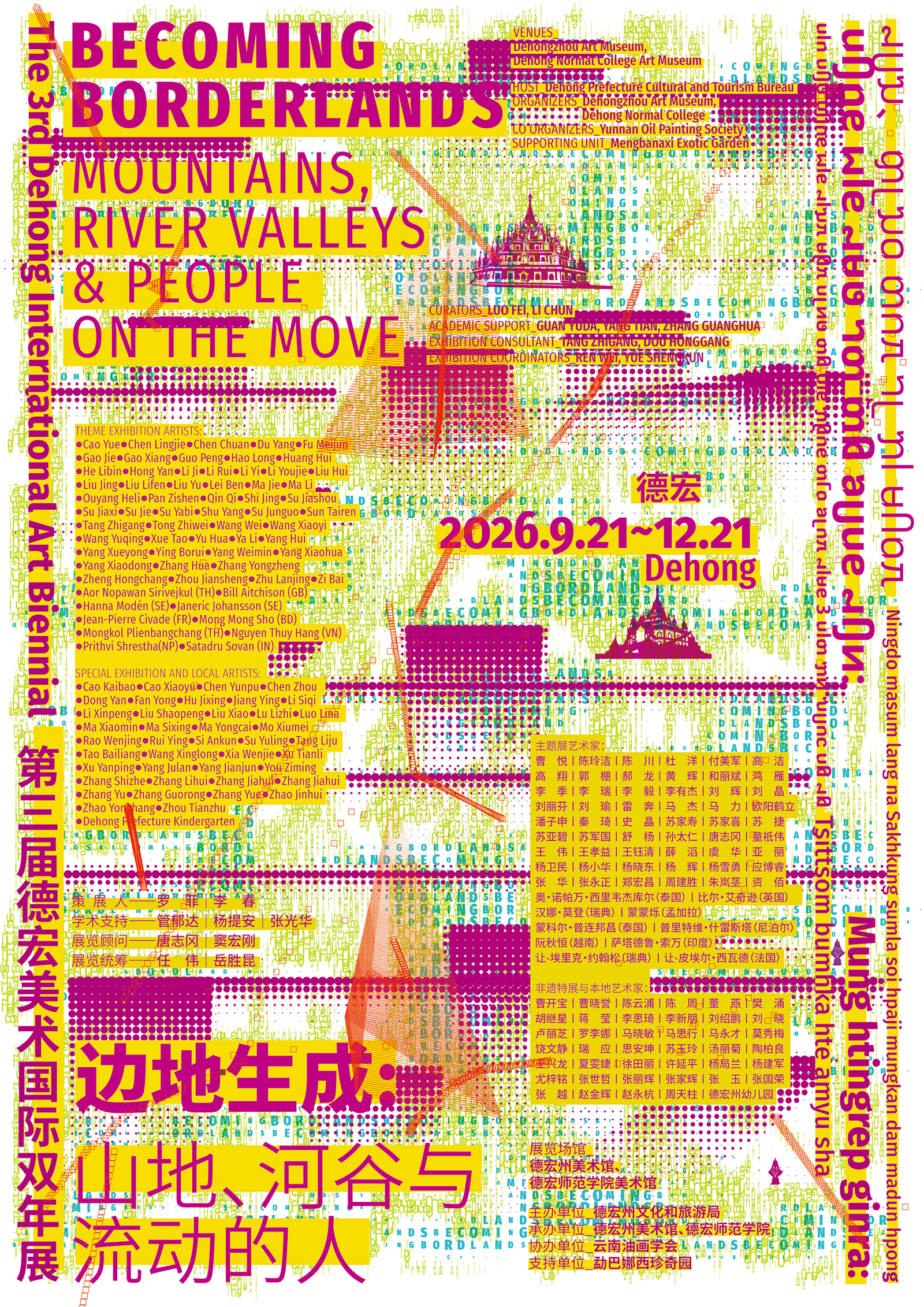
Host: Dehong Prefecture Cultural and Tourism Bureau
Organizers: Dehong Art Museum, Dehong Normal College
Co organizers: Yunnan Oil Painting Society
Supporting unit: Mengbanaxi Exotic Garden
Curators: Luo Fei, Li Chun
Academic Supports: Guan Yuda, Yang Tian, Zhang Guanghua
Exhibition Consultants: Tang Zhigang, Dou Honggang
Exhibition Coordinators: Ren Wei, Yue Shengkun
Opening: 10:00 am, September 21st, 2026 at Dehong Art Museum
Exhibition Duration: September 21st to December 21st, 2026
Venues: Dehong Art Museum, Dehong Normal College Art Museum
Theme Exhibition Artists
Cao Yue, Chen Lingjie, Chen Chuan, Du Yang, Fu Meijun, Gao Jie, Gao Xiang, Guo Peng, Hao Long, Huang Hui, He Libin, Hong Yan, Li Ji, Li Rui, Li Yi, Li Youjie, Liu Hui, Liu Jing, Liu Lifen, Liu Yu, Lei Ben, Ma Jie, Ma Li, Ouyang Heli, Pan Zishen, Qin Qi, Shi Jing, Su Jiashou, Su Jiaxi, Su Jie, Su Yabi, Shu Yang, Su Junguo, Sun Tairen, Tang Zhigang, Tong Zhiwei, Wang Wei, Wang Xiaoyi, Wang Yuqing, Xue Tao, Yu Hua, Ya Li, Yang Hui, Yang Xueyong, Ying Borui, Yang Weimin, Yang Xiaohua, Yang Xiaodong, Zhang Hua, Zhang Yongzheng, Zheng Hongchang, Zhou Jiansheng, Zhu Lanjing, Zi Bai
Aor Nopawan Sirivejkul (TH), Bill Aitchison (GB), Hanna Modén (SE), Janeric Johansson (SE), Jean-Pierre Civade (FR), Mong Mong Sho (BD), Mongkol Plienbangchang (TH), Nguyen Thuy Hang (VN), Prithvi Shrestha(NP), Satadru Sovan (IN)
Special Exhibition and Local Artists
Cao Kaibao, Cao Xiaoyu, Chen Yunpu, Chen Zhou, Dong Yan, Fan Yong, Hu Jixing, Jiang Ying, Li Siqi, Li Xinpeng, Liu Shaopeng, Liu Xiao, Lu Lizhi, Luo Lina, Ma Xiaomin, Ma Sixing, Ma Yongcai, Mo Xiumei, Rao Wenjing, Rui Ying, Si Ankun, Su Yuling, Tang Liju, Tao Bailiang, Wang Xinglong, Xia Wenjie, Xu Tianli, Xu Yanping, Yang Julan, Yang Jianjun, You Ziming, Zhang Shizhe, Zhang Lihui, Zhang Jiahui, Zhang Jiahui, Zhang Yu, Zhang Guorong, Zhang Yue, Zhao Jinhui, Zhao Yonghang, Zhou Tianzhu, Dehong Prefecture Kindergarten